
Why does the eye keep growing?
Blur, contrast, the choroid and the sclera.
The eye reads visual signals to decide how much to grow
Part 02 · 01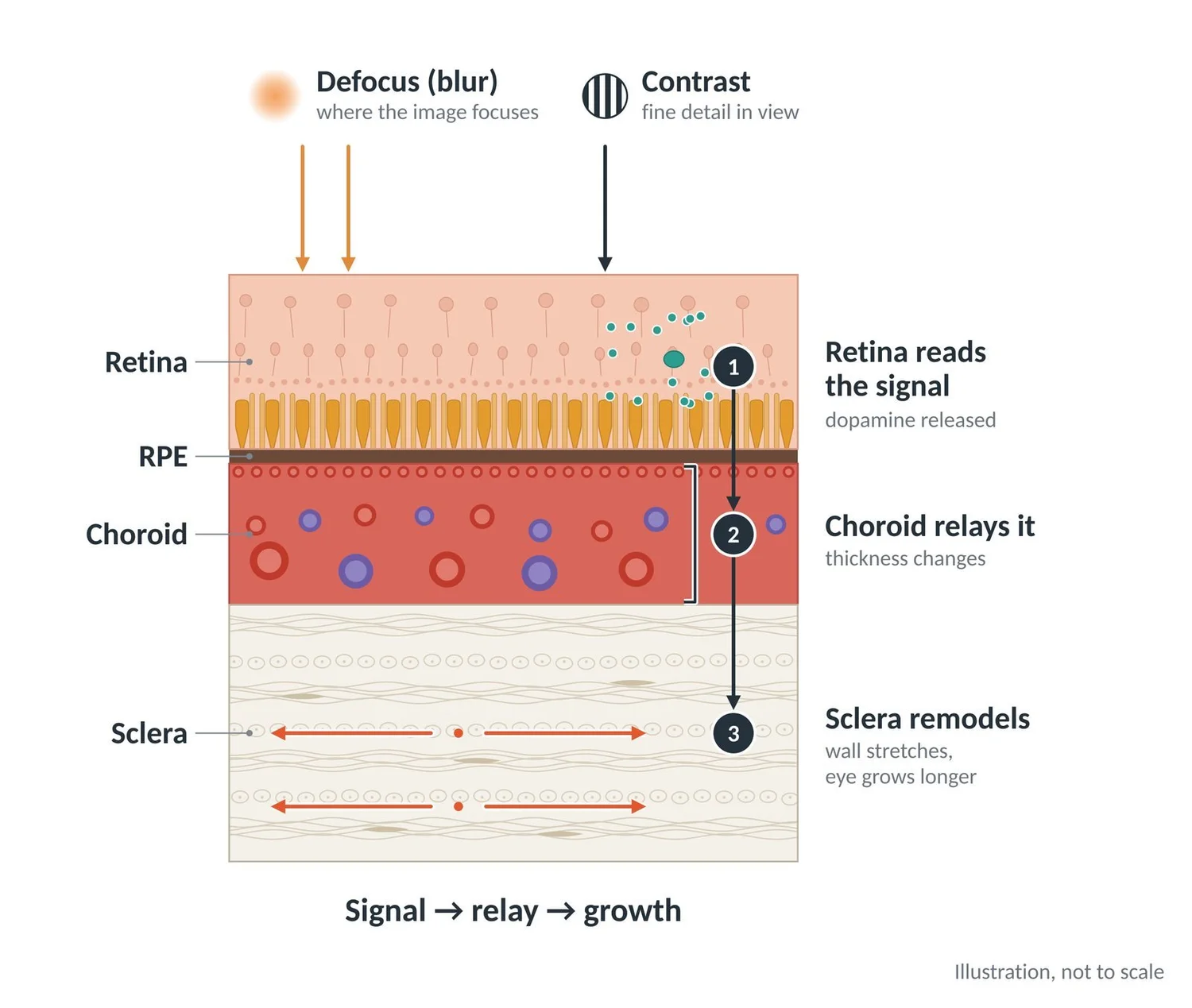
- 01
The retina reads the signal
Blur and contrast patterns in what the child sees.
- 02
The choroid relays it
A blood-vessel layer that thickens or thins in response.
- 03
The sclera remodels
The eye’s outer wall stretches, or holds firm.
Signal 1: blur at the edges of vision
Part 02 · 02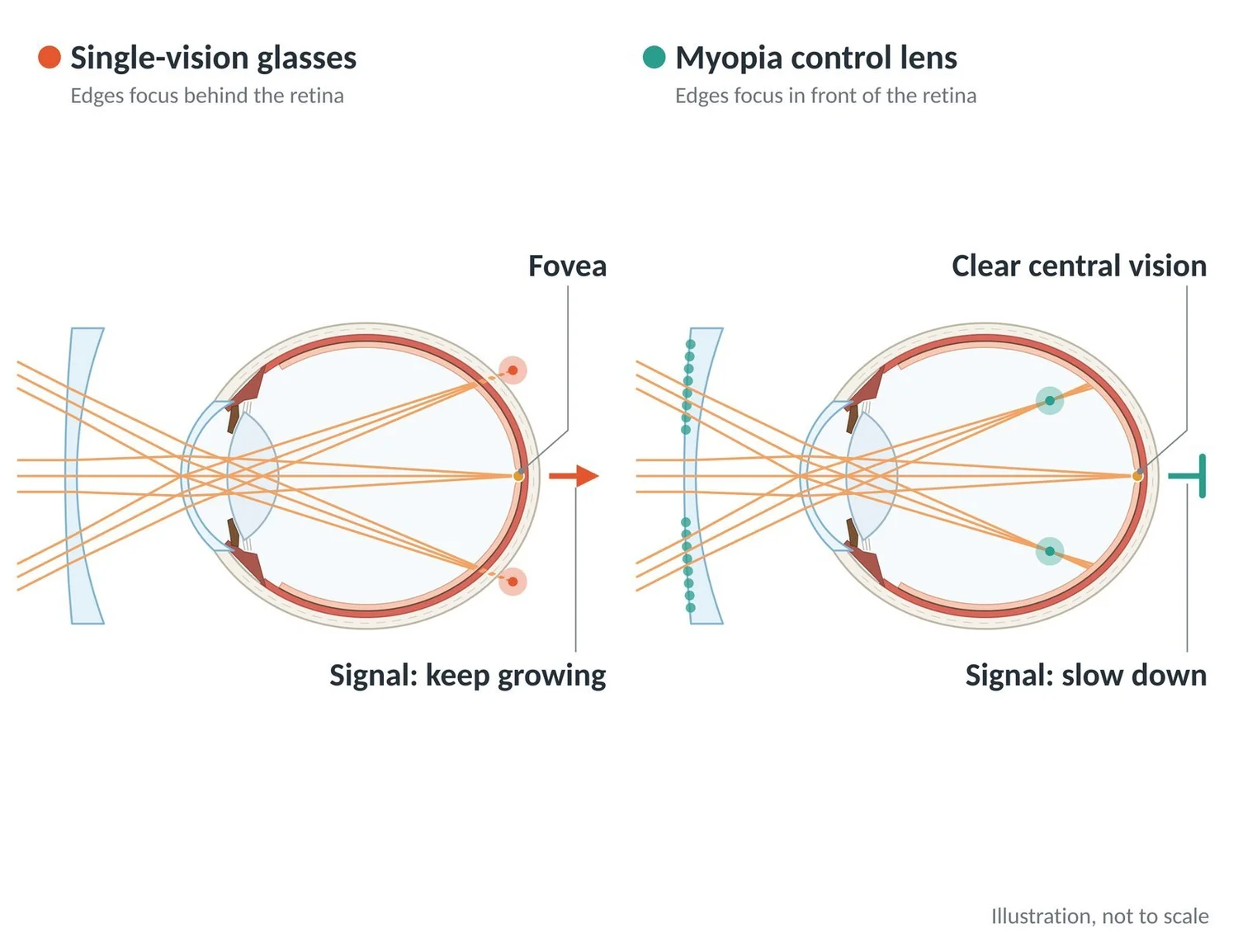
- 01
Blur behind the retina says “grow”
Regular glasses can leave the edges focused behind it.
- 02
Blur in front says “slow down”
Myopia control lenses move that blur in front.
- 03
Central vision stays clear
Your child still sees sharply through the centre.
Signal 2: high-contrast close work
Part 02 · 03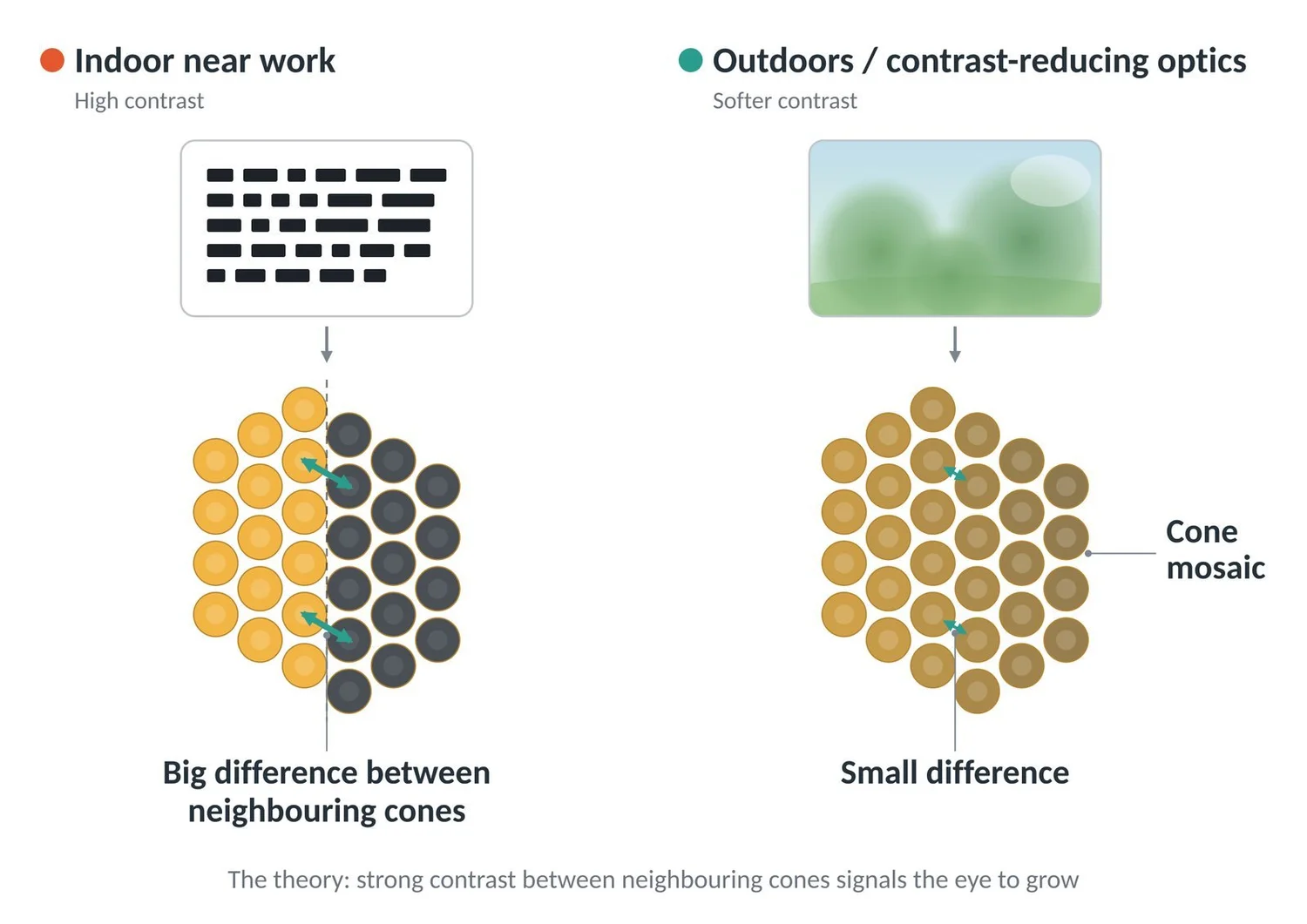
- 01
Black text on a white page
Creates strong contrast between neighbouring light-sensing cells.
- 02
The theory: strong contrast drives growth
Softer natural scenes outdoors send a weaker signal.
- 03
Two signals, one system
Blur and contrast probably work together.
The relay: a thicker choroid is an early good sign
Part 02 · 04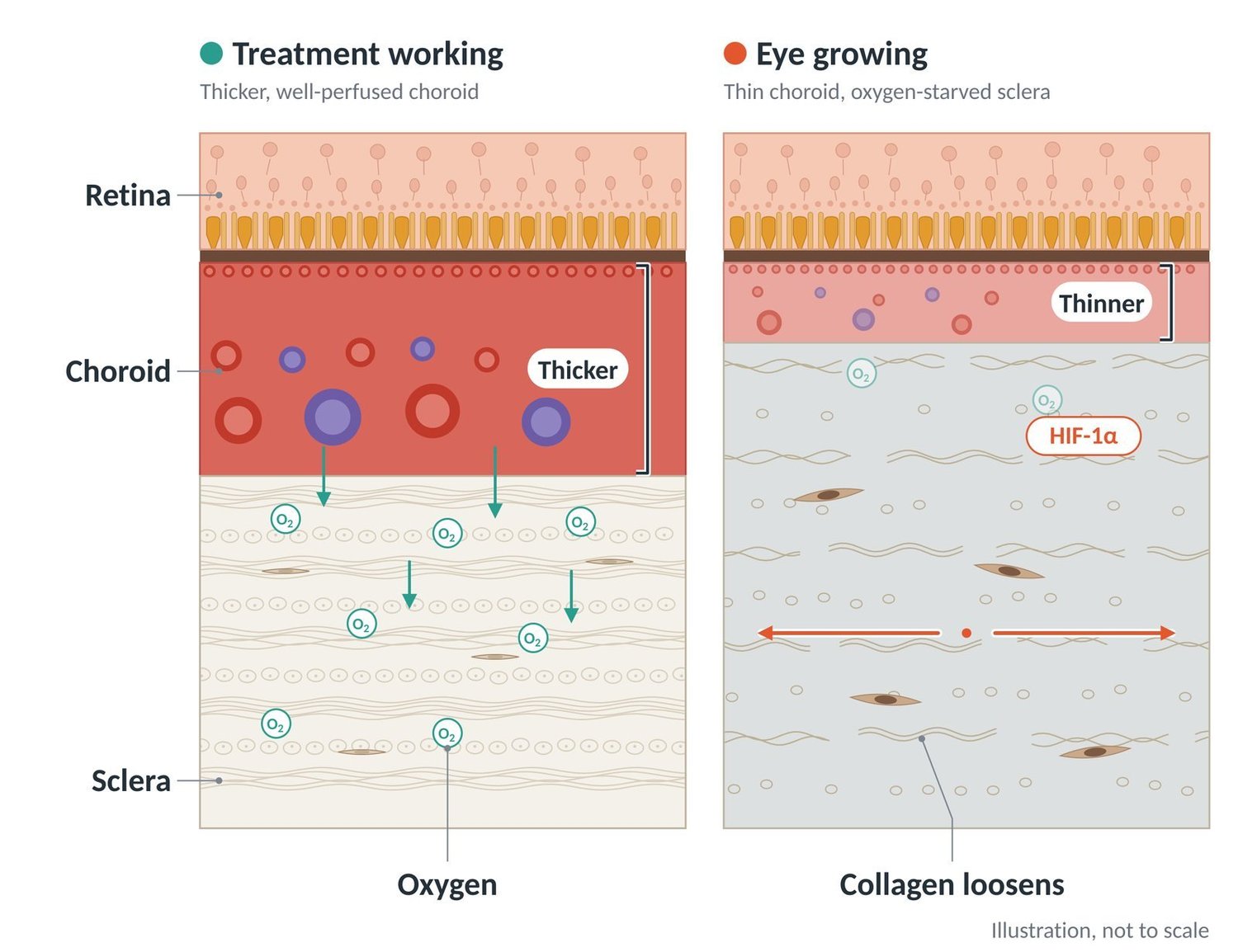
- 01
The choroid is a layer of blood vessels
It sits between the retina and the eye’s outer wall.
- 02
It thickens when treatment works
Often within days to weeks of starting.
- 03
Better blood flow protects the sclera
A starved, low-oxygen sclera stretches more easily.
Inflammation: an emerging piece of the puzzle
Part 02 · 05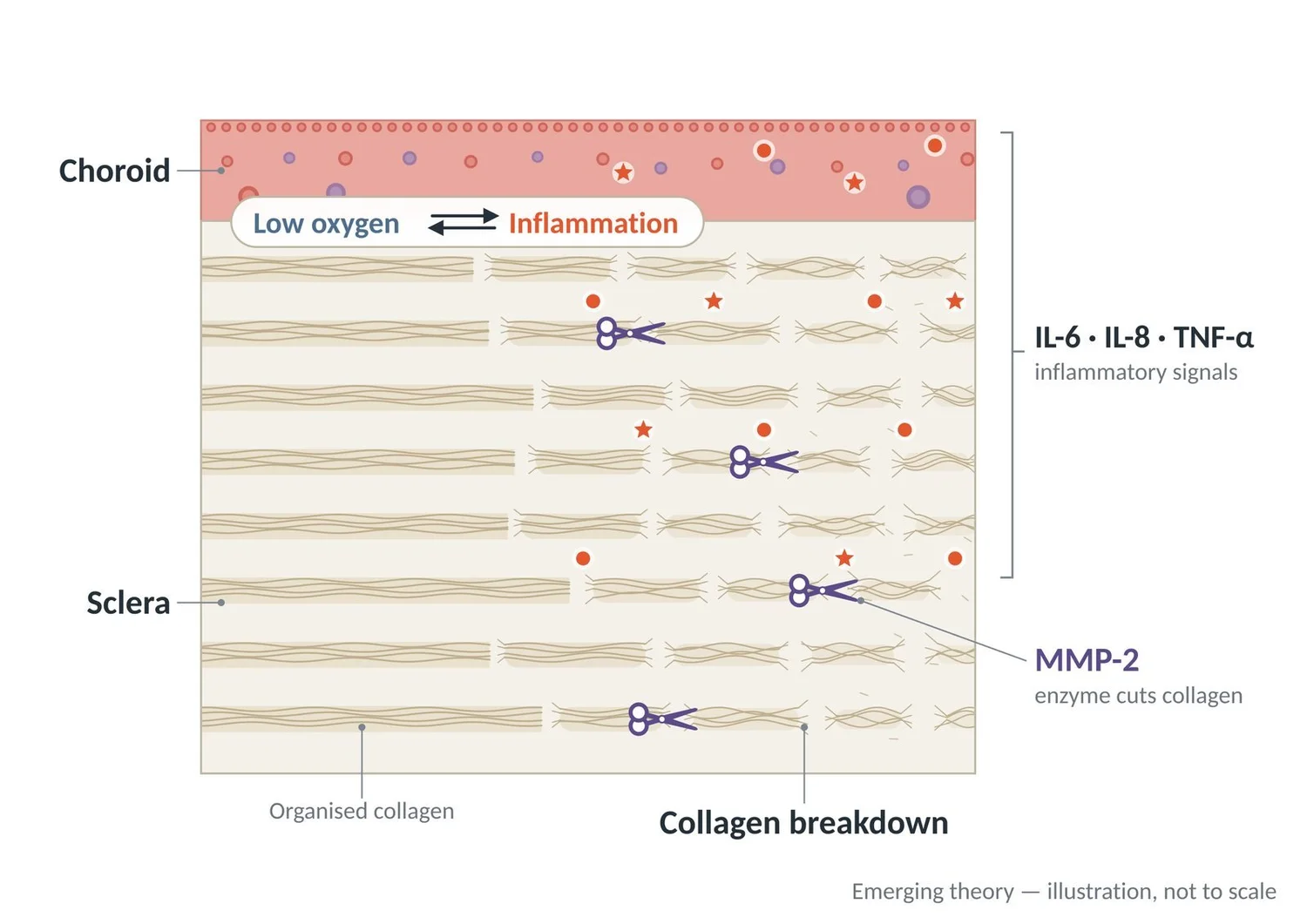
- 01
Linked with some inflammatory conditions
Allergic eye disease, uveitis, arthritis, type 1 diabetes.
- 02
Inflammatory markers are higher in myopic eyes
Including enzymes that break down the eye’s wall.
- 03
Still a theory, not yet a treatment
Researchers are working out cause versus effect.
In summary
Part 02- 01Blur and contrast tell the eye whether to grow.
- 02The choroid relays that signal to the eye wall.
- 03Good choroid blood flow helps keep the sclera firm.
Book a myopia assessment.
Child getting more short-sighted each year? We measure eye length to see how fast their eyes are growing.
General information only, not personal advice. Every child is different. Treatment is decided after a full eye examination.